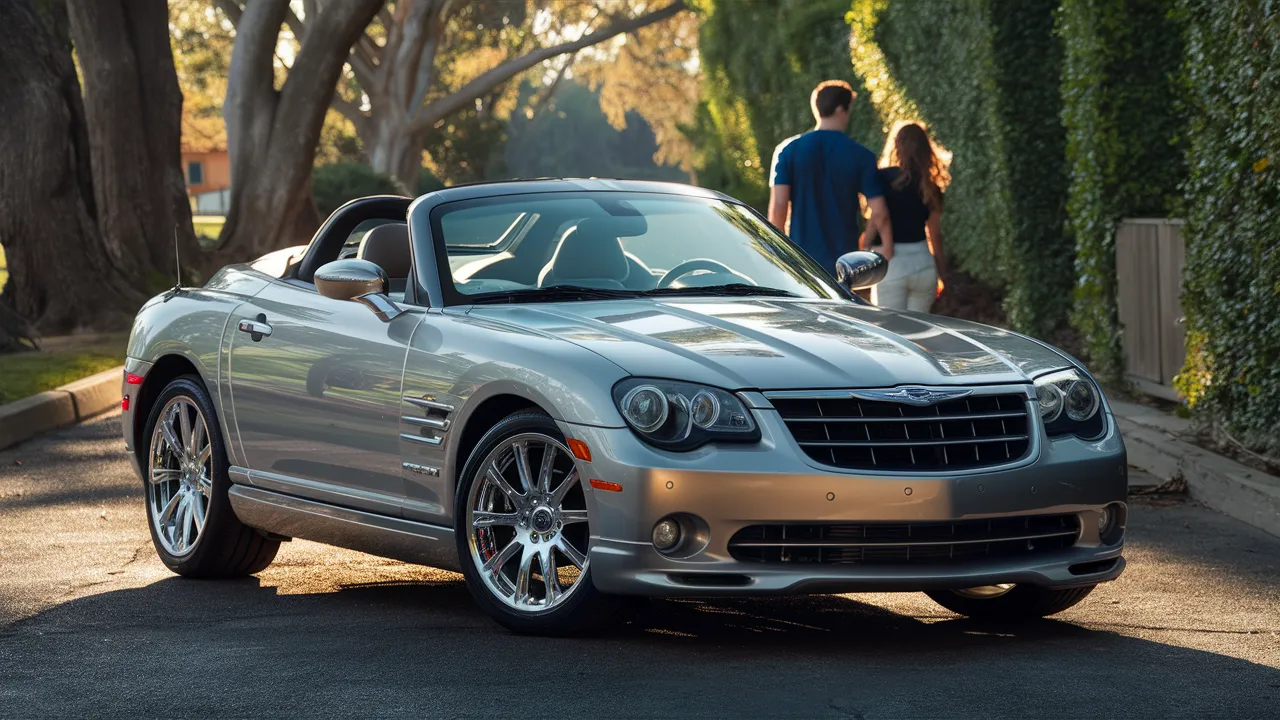
Chrysler Crossfire – The Bold German-American Sports Car That Stood Out
The Chrysler Crossfire is one of the most distinctive and unusual sports cars ever produced by Chrysler. Manufactured between 2004 and 2008, the Crossfire combined American design ambition with German engineering foundations, resulting in a unique coupe and roadster that still attracts attention today.
Built during a partnership period with Mercedes-Benz’s parent company Daimler, the Crossfire shared much of its mechanical structure with the Mercedes SLK platform. This collaboration gave the car strong engineering credibility while Chrysler provided bold styling that set it apart from typical European sports cars.
Origins of the Chrysler Crossfire
The Chrysler Crossfire was first introduced as a concept car in the early 2000s and received strong public interest due to its futuristic design. Chrysler decided to bring it into production with minimal changes, which is why the road-going version closely resembles the original concept.
The name “Crossfire” symbolizes the blending of two automotive worlds:
- American design language from Chrysler
- German engineering from Mercedes-Benz
At the time, this partnership was part of DaimlerChrysler, a corporate alliance that allowed shared technology between the two brands.
Exterior Design – One of the Most Recognizable Shapes
The Chrysler Crossfire is instantly recognizable due to its unusual and sculpted design.
Key exterior features:
- Long hood with short rear deck
- Distinctive “crosshair” grille design
- Wide rear fenders giving a muscular stance
- Boat-tail inspired rear styling
- Aerodynamic coupe and roadster versions
The design was created by Eric Stoddard and Andrew Dyson, and it stood out dramatically from other sports cars of its era.
Some enthusiasts loved its bold look, while others considered it controversial. However, almost everyone agreed that it was unforgettable.
Coupe and Roadster Variants
The Crossfire was produced in two main body styles:
1. Coupe
- Fixed roof design
- More rigid structure
- Slightly better performance handling
2. Roadster
- Retractable soft top
- More relaxed driving experience
- Slightly reduced practicality
Both versions shared the same core design philosophy but catered to different driving preferences.
Engine and Performance
Under the hood, the Crossfire did not aim to be a high-powered supercar. Instead, it focused on balanced performance and reliability.
Engine specifications:
- 3.2-litre V6 engine
- Around 215–330 horsepower depending on variant (standard and SRT-6 models)
- Rear-wheel drive layout
- 6-speed manual or 5-speed automatic transmission
The base model provided smooth and comfortable performance, while the performance-oriented SRT-6 version delivered significantly more power and sportier dynamics.
Performance highlights:
- 0–100 km/h in around 6–7 seconds (standard model)
- Faster acceleration in SRT-6 variant
- Stable highway cruising
- Predictable handling balance
The Crossfire was not designed to compete with extreme sports cars but instead offered a refined driving experience with sporty character.
Mercedes-Benz Engineering Influence
One of the most important aspects of the Crossfire is its engineering foundation.
The car was built on the same platform as the Mercedes-Benz SLK-Class, which provided:
- Strong chassis rigidity
- Proven suspension systems
- Reliable drivetrain components
- German engineering refinement
This shared architecture helped improve the Crossfire’s driving stability and long-term reliability compared to many other Chrysler models of the time.
Interior Design – Functional but Minimalist
Inside the Crossfire, the design is more conservative compared to its bold exterior.
Interior features:
- Driver-focused cockpit layout
- Leather seats in higher trims
- Circular air vents inspired by Mercedes design
- Simple dashboard layout
- Basic infotainment systems (for modern standards)
While the interior was not considered luxurious by today’s expectations, it was solidly built and ergonomically designed.
The cabin focused more on driving experience than technology or luxury features.
Driving Experience
The Chrysler Crossfire delivers a balanced and predictable driving experience.
Driving characteristics:
- Rear-wheel drive handling
- Stable cornering performance
- Light steering feel
- Comfortable ride on highways
The car feels more like a grand tourer than a pure sports car. It is designed for relaxed yet engaging driving rather than aggressive track performance.
SRT-6 – The Performance Version
The most exciting variant of the Crossfire was the SRT-6 model, developed by Chrysler’s Street and Racing Technology division.
SRT-6 upgrades include:
- Supercharged V6 engine
- Around 330 horsepower
- Faster acceleration
- Upgraded suspension
- Enhanced braking system
The SRT-6 significantly improved performance and gave the Crossfire a more serious sports car character.
Practicality and Everyday Use
Although the Crossfire is a sports car, it offers reasonable practicality for its segment.
Practical features:
- Small but usable trunk space
- Comfortable seating for two
- Good fuel efficiency for a V6 sports car
- Compact size for city driving
However, it is not designed for families or heavy cargo use.
Market Position and Competitors
At the time of its release, the Crossfire competed in a niche sports car segment.
Main rivals included:
- BMW Z4
- Audi TT
- Mazda MX-5 Miata
Compared to these competitors, the Crossfire stood out for:
- Unique styling
- Mercedes-based engineering
- Comfortable grand touring focus
However, it was often criticized for not being as sporty or engaging as rivals like BMW or Mazda.
Production and End of the Model
The Chrysler Crossfire was produced from 2004 to 2008. After production ended, Chrysler shifted its focus to other models as the Daimler partnership dissolved.
Despite its relatively short production run, the Crossfire developed a loyal following among enthusiasts who appreciate its unique design and rarity.
Strengths and Weaknesses
Strengths:
- Unique and memorable design
- Mercedes-based engineering reliability
- Comfortable driving experience
- Strong highway stability
- Affordable used sports car option today
Weaknesses:
- Limited rear visibility
- Interior feels dated by modern standards
- Not as sporty as rivals
- Limited practicality
Legacy of the Chrysler Crossfire
The Crossfire remains an interesting chapter in automotive history. It represents a rare collaboration between American design and German engineering.
While it was not a commercial blockbuster, it succeeded in creating a distinctive identity in the sports car market. Today, it is often appreciated as a niche collector’s vehicle and a symbol of early 2000s automotive experimentation.
Conclusion
The Chrysler Crossfire is a bold and unconventional sports car that reflects a unique era in automotive history. Produced by Chrysler, it combined Mercedes-Benz engineering with striking American design to create a vehicle that still stands out on the road today.