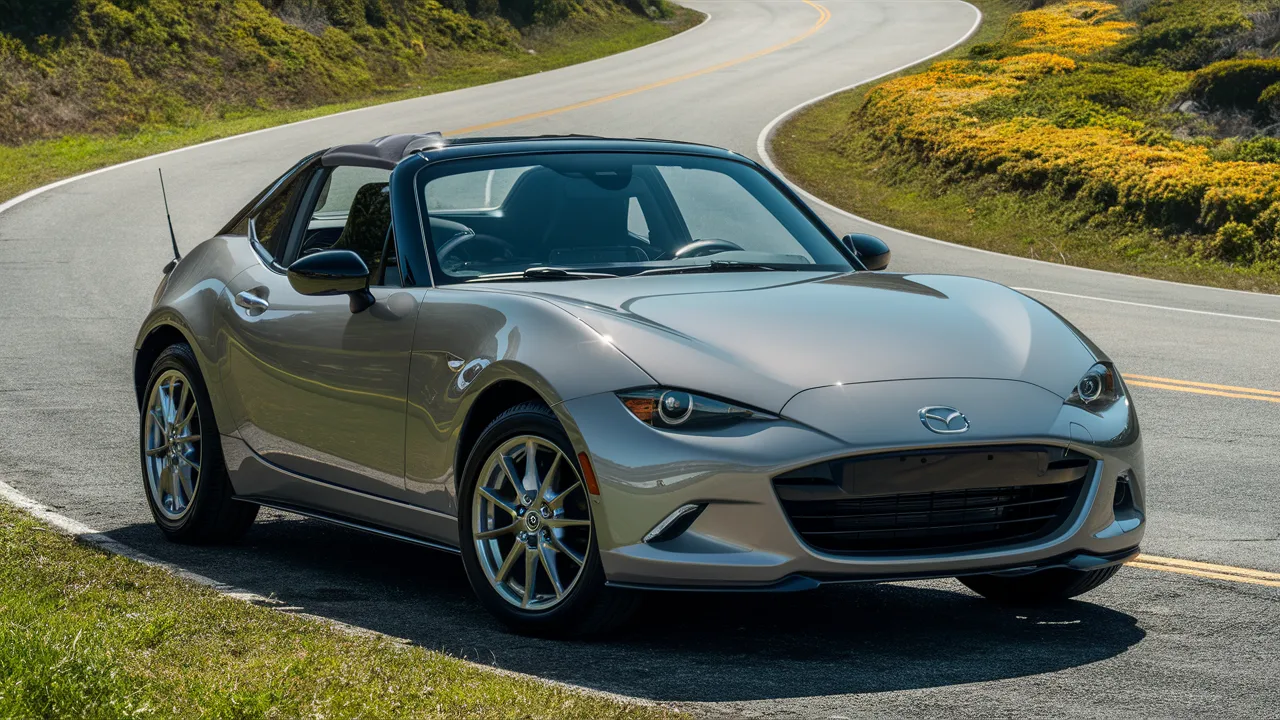
Mazda 323 – The Reliable Compact Car That Built Mazda’s Reputation
The Mazda 323 is one of the most important vehicles ever produced by Mazda. Known for its reliability, practicality, affordability, and sporty character, the Mazda 323 became a highly successful compact car in global markets for several decades.
Produced across multiple generations from the 1960s until the early 2000s, the Mazda 323 evolved from a simple economy car into a well-rounded compact vehicle that appealed to families, commuters, and driving enthusiasts alike. In some markets, it also became famous for its performance-oriented versions and motorsport heritage.
Even today, the Mazda 323 remains respected for its durability and straightforward engineering.
🚗 Origins of the Mazda 323
The Mazda 323 was introduced as part of Mazda’s growing compact car lineup during a period when Japanese automakers were expanding globally.
Mazda aimed to create a vehicle that offered:
- Affordable ownership
- Fuel efficiency
- Practical everyday usability
- Dependable engineering
The car quickly became popular in markets across:
- Asia
- Europe
- Australia
- Africa
- South America
Its success helped Mazda strengthen its international reputation.
🌍 Global Popularity and Different Names
Depending on the region and generation, the Mazda 323 was sold under different names.
Some international variations included:
- Mazda Familia (Japan)
- Mazda Protegé (North America, later generations)
Despite the different names, the core identity remained the same: a compact and dependable family car.
Its adaptability to different markets played a major role in its long-term success.
🎨 Exterior Design Through the Generations
The Mazda 323 went through many design changes over its production history.
Early generations featured:
- Boxy compact styling
- Simple and lightweight construction
- Small dimensions ideal for city driving
Later generations introduced:
- More aerodynamic body shapes
- Sportier front-end designs
- Improved lighting systems
- Modern hatchback and sedan styling
The evolution reflected changing automotive trends over several decades.
Some later 323 models were especially praised for their sporty appearance and youthful styling.
🛋️ Interior and Comfort
The Mazda 323 focused primarily on practicality and usability.
Interior highlights:
- Straightforward dashboard layout
- Comfortable seating for compact dimensions
- Durable materials
- Easy-to-read controls
While early models were basic, later generations improved significantly in:
- Cabin quality
- Noise insulation
- Seating comfort
- Technology features
The hatchback versions were particularly practical because they provided flexible cargo space.
⚙️ Engine Options and Reliability
One of the biggest reasons for the Mazda 323’s popularity was its dependable engine lineup.
Common engine types included:
- Small petrol four-cylinder engines
- Fuel-efficient diesel engines in some markets
- Performance-oriented turbocharged variants
Key advantages:
- Good fuel economy
- Reliable long-term operation
- Low maintenance costs
- Smooth daily driving performance
Mazda engines earned a reputation for durability, especially when properly maintained.
Even older 323 models are still found on roads in many countries today.
🚙 Driving Experience – Lightweight and Engaging
Unlike some competitors that focused purely on comfort, the Mazda 323 often delivered a surprisingly enjoyable driving experience.
Driving characteristics:
- Lightweight chassis
- Responsive steering
- Agile handling
- Comfortable suspension balance
Mazda has long been known for building cars that feel more engaging to drive, and the 323 reflected this philosophy.
Its compact size also made it ideal for urban driving and parking.
🏁 Performance Variants and Motorsport Heritage
Although most Mazda 323 models were practical family cars, some versions became legendary among enthusiasts.
Famous performance versions included:
- Mazda 323 GTX
- Mazda 323 GTR
These models featured:
- Turbocharged engines
- All-wheel-drive systems
- Rally-inspired engineering
The performance-oriented 323 models gained attention because they competed in rally motorsport during the late 1980s and early 1990s.
Motorsport influence:
- Improved suspension tuning
- Strong turbocharged performance
- Enhanced traction systems
These high-performance variants remain collectible among enthusiasts today.
⛽ Fuel Efficiency and Everyday Practicality
The Mazda 323 was designed during periods when fuel economy became increasingly important.
Fuel efficiency benefits:
- Lightweight construction
- Efficient small-capacity engines
- Low running costs
This made the car popular among:
- Students
- Families
- First-time car buyers
- Daily commuters
Affordable ownership became one of the strongest selling points of the 323.
🔧 Maintenance and Durability
One of the Mazda 323’s greatest strengths is its mechanical simplicity.
Reliability advantages:
- Straightforward engineering
- Widely available parts
- Relatively low repair costs
- Durable engines and transmissions
In many regions, mechanics appreciated the car because it was easy to maintain and repair.
This durability contributed to the 323’s long-lasting popularity.
⚖️ Competitors of the Mazda 323
The Mazda 323 competed in one of the world’s most competitive automotive segments.
Main rivals included:
- Toyota Corolla
- Honda Civic
- Nissan Sunny
- Ford Escort
Compared to these rivals, the 323 was often praised for:
- Fun driving dynamics
- Strong reliability
- Competitive pricing
- Practical hatchback designs
While some competitors offered more refined interiors, the 323 stood out for its balanced character.
🌟 Legacy of the Mazda 323
The Mazda 323 played a major role in shaping Mazda’s global image.
Its legacy includes:
- Helping Mazda expand internationally
- Building a reputation for reliability
- Introducing sporty compact driving dynamics
- Creating iconic rally-inspired variants
The car eventually evolved into newer Mazda compact models such as the:
- Mazda3
The Mazda3 carried forward many of the same principles:
- Practicality
- Efficiency
- Fun driving experience
✔️ Pros and Cons
✔️ Advantages:
- Excellent reliability
- Affordable maintenance
- Fuel-efficient engines
- Practical compact size
- Fun handling characteristics
❌ Disadvantages:
- Basic interiors in older models
- Limited modern safety technology
- Some models prone to rust in harsh climates
- Performance variants can be difficult to find today
🌍 Why Enthusiasts Still Appreciate the Mazda 323
Today, the Mazda 323 continues to attract attention from:
- Classic car enthusiasts
- JDM fans
- Rally car collectors
- Drivers seeking affordable reliability
Many people appreciate the car because it represents a simpler era of automotive engineering.
The lightweight design and mechanical simplicity make it enjoyable even decades after production ended.
🧾 Conclusion
The Mazda 323 remains one of the most important models in the history of Mazda. Known for its reliability, affordability, practicality, and surprisingly enjoyable driving experience, the 323 became a global success across multiple generations.